How to choose the best geotechnical engineering firm in Bangladesh: boring and SPT standards, laboratory tests, report quality, ground improvement ability and the questions that reveal real expertise.
Bangladesh sits on a deep, young delta of silt, clay and fine sand. Soil can change character within a few metres, groundwater is shallow and many sites contain soft compressible clay or loose sand. That is why the choice of a geotechnical engineering firm influences the safety and cost of your building as much as the structural designer does.
This guide explains how to identify a competent geotechnical partner: what a professional investigation includes, which standards and tests matter, how to read the quality of a report, when ground improvement or deep foundations are needed and which questions reveal real expertise.
What a geotechnical firm delivers
The output is not just a table of N-values. A complete package includes borehole logs, groundwater level, laboratory results (moisture content, Atterberg limits, grain size, consolidation, shear strength), allowable bearing capacity for shallow foundations, pile capacity for deep foundations, settlement estimates, liquefaction screening for seismic zones and construction recommendations such as dewatering, excavation support and monitoring.
In short: field data, laboratory data, engineering analysis and clear advice. If a quotation covers only drilling, you are buying a service, not a geotechnical engineering opinion.
Why delta soils need extra care
- Soft clay and silt can consolidate slowly for years, causing long-term settlement even when strength looks adequate.
- Loose saturated sand can lose strength during strong shaking (liquefaction), which matters in a seismically active region.
- High groundwater complicates excavation, basement construction and waterproofing.
- Fill and old ponds create uneven, uncontrolled ground that must be identified before design.
- Rapid lateral variation means two nearby plots can behave differently.
These conditions make a project-specific investigation essential and make copy-paste foundations dangerous.
Field work: the quality markers
- Number and depth of boreholes tied to building size and load, not a flat number. High-rise projects normally need deeper borings and more locations than low-rise.
- SPT at regular intervals (commonly every 1.5 m) with a calibrated hammer and recorded energy details.
- Undisturbed samples from clay layers for consolidation and strength testing.
- Groundwater observation recorded at the time of boring and after stabilisation.
- Careful logging of soil description, colour, moisture and any organic matter or fill.
- Engineer supervision on site, not only drilling crews.
Laboratory tests and what each tells you
| Test | What it tells you |
|---|---|
| Natural moisture content and unit weight | Basic state and density of the soil |
| Atterberg limits | Plasticity and classification of clay and silt |
| Sieve and hydrometer analysis | Grain size distribution of sand and silt |
| Unconfined compression / direct shear / triaxial | Shear strength for bearing capacity and stability |
| Consolidation (oedometer) | How much and how fast clay will settle |
| Chemical tests (sulphate, chloride, pH) | Aggressiveness to concrete and reinforcement |
Ask which tests will be run on your samples and where. A report with no laboratory data is a warning sign.
What a good report looks like
- Site description, scope and investigation method.
- Borehole logs showing layers, N-values, sample types and groundwater.
- Laboratory summary with test sheets attached.
- Engineering interpretation: design soil parameters, bearing capacity with method and safety factor, settlement estimate.
- Foundation recommendation with alternatives and pile capacities where relevant.
- Liquefaction and seismic site classification comments.
- Construction advice: excavation, dewatering, monitoring, precautions near neighbours.
- A named, signing engineer and stated limitations.
Our guide How to read a geotechnical report explains each part in plain language.
From investigation to foundation and ground improvement
Many firms stop at testing. The advantage of a firm that also designs is continuity: the same team that read the soil recommends shallow footings, a raft, bored piles or driven piles, then checks settlement and group effects. If the ground is too weak for the planned load, methods such as PVD with preloading, sand compaction piles or vibro-replacement can be evaluated before the project cost is locked in. See also our guides on ground improvement and pile foundations.
| Soil situation | Typical direction |
|---|---|
| Competent soil at shallow depth | Isolated or strip footings, or raft |
| Soft clay near surface, moderate loads | Raft with settlement control, or ground improvement |
| Deep soft deposits, heavy loads | Bored or driven piles, piled raft |
| Large industrial area on soft clay | PVD with preloading, sand compaction piles |
| Loose sand below water table | Densification or piles with liquefaction check |
Questions that reveal real expertise
- How do you decide borehole depth for this building?
- Which laboratory tests will you run on the clay layers?
- How do you treat liquefaction potential at this site?
- Can you give settlement estimates, not only bearing capacity?
- Will the same team support foundation design and site verification?
- How do you handle groundwater and basement excavation?
- What load tests do you recommend for piles?
Vague or generic answers usually mean a drilling contractor, not a geotechnical consultant.
Common mistakes in soil investigation
- Too few or too shallow boreholes for a heavy building.
- Treating the report as a formality and choosing the foundation before it arrives.
- Ignoring groundwater when planning basements.
- Reusing a report from a neighbouring plot.
- Skipping pile load tests to save time.
Our approach at Geotech & Structures Ltd.
GnS combines subsoil investigation, laboratory testing and foundation design with specialist review, including geotechnical academics, for high-rise buildings with multiple basements and for projects on difficult ground. We also handle piling and ground improvement, so the investigation, design and execution advice come from one accountable team. Contact us with your plot location and building type for a scoped proposal.
Talk to a specialist engineer
Share your plot and building details and our engineers will reply with a clear, scoped proposal.
Frequently asked questions
How many boreholes does a building need?
It depends on plot size, building height and soil variability. Small residences may need one or two, while larger and high-rise projects need more and deeper boreholes. A geotechnical engineer should justify the number.
What is SPT and why does it matter?
The Standard Penetration Test counts hammer blows needed to drive a sampler into soil. The N-value helps estimate strength and density and is a basis for bearing capacity and pile design.
Can a geotechnical report be reused for another plot?
No. Soil can vary within a short distance, and a report is valid only for the investigated location and conditions.
Is soil testing really necessary for a small house?
Yes. A modest soil investigation costs far less than repairing settlement cracks. See our guide on soil testing before building a house.
What is the difference between a soil testing lab and a geotechnical firm?
A lab tests samples. A geotechnical firm plans the investigation, interprets results and recommends foundation type, capacity and settlement behaviour.
When are piles necessary?
When shallow soil cannot safely carry the load within acceptable settlement, for example in deep soft clay or for heavy buildings. A geotechnical engineer decides after analysing the investigation data.
Does liquefaction matter in Bangladesh?
Yes, in a seismically active delta with loose saturated sand it should be screened for important or tall buildings as part of the investigation.
Related reading
Planning a project in Bangladesh?
Our specialist engineers apply exactly what this article covers to real projects — from structural & foundation design to 3D visualisation. See our completed projects.
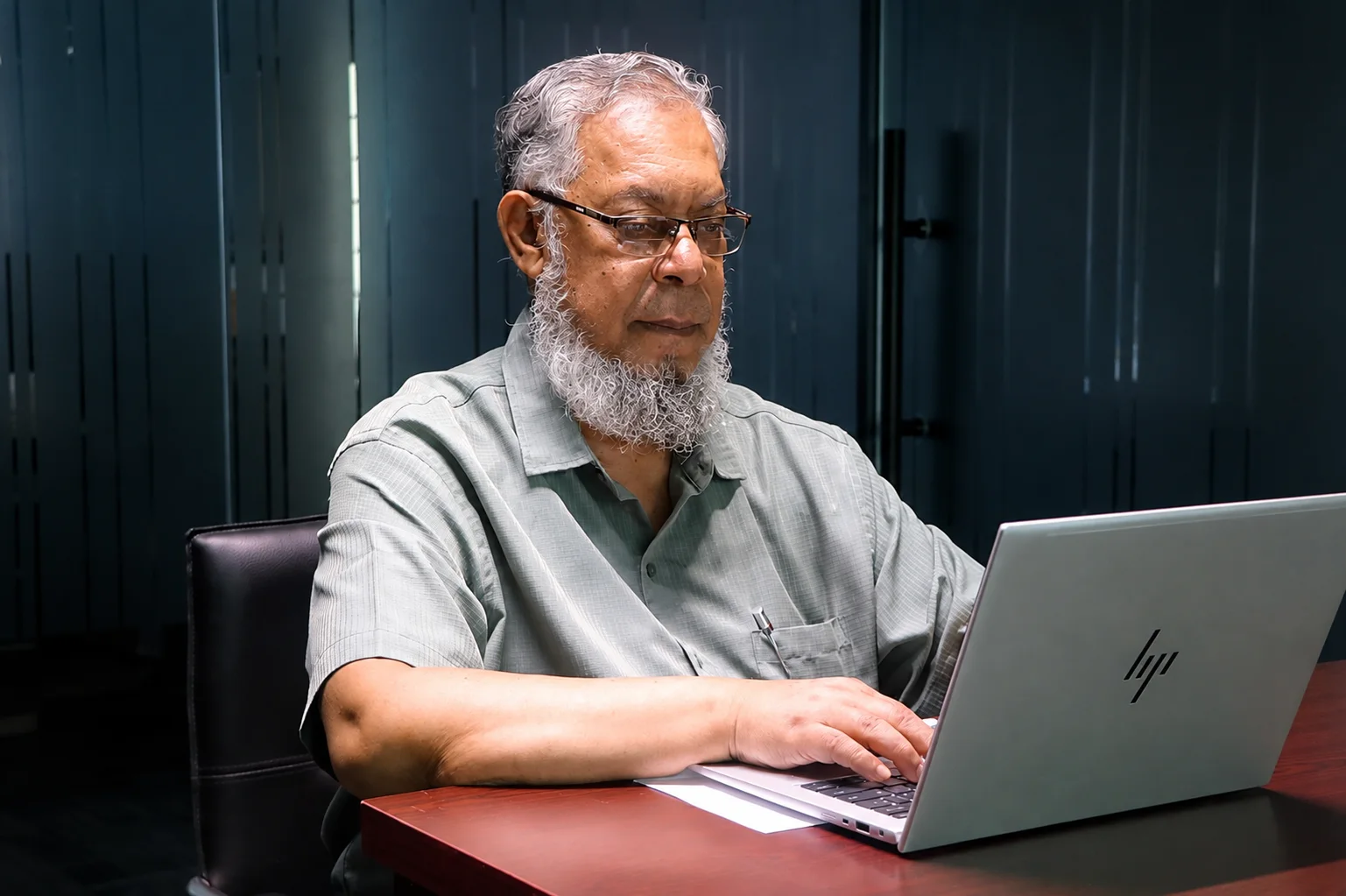
Prof. Dr. Ahasanul Kabir
Former Professor of Civil Engineering Department, BUET
This article was reviewed for technical accuracy by Prof. Dr. Ahasanul Kabir, ensuring it reflects sound engineering practice and Bangladesh National Building Code (BNBC) standards.